
Thomas Tregellas
Interpretive signage along the Country theme
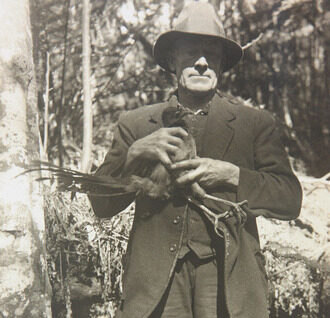
Thomas Tregellas
“I heard one of the most remarkable performances it had ever been my lot to hear. Beginning always with the call of the jackass [laughing kookaburra], he rapidly changed to that of the butcher bird. Then followed in rapid succession the notes of the grey thrush, coach whip-bird, wattle, pilot, strepera [currawong], and white-eared honey-eater, mingled with the sounds of rubbing limbs and metallic clinking of wedges.”
Thomas Tregellas, 1914[1]
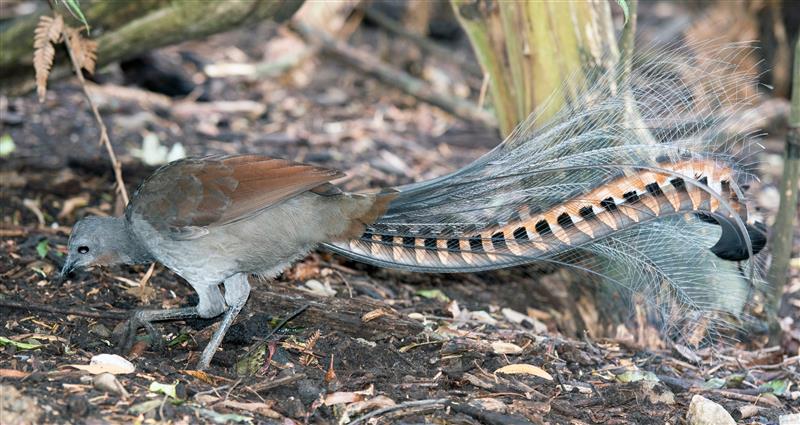
The Dandenong Ranges are home to one of the most elusive Australian birds, the superb lyrebird (Menura novaehollandiae). Rarely seen but often heard, lyrebirds are renowned for their magnificent tails and ability to mimic almost every sound they encounter. Wurundjeri people hunted the lyrebird to collect and trade tail feathers with other clan groups and, after colonisation, to sell in Melbourne.
Thomas (Tom) Tregellas was by and large a naturalist, collecting specimens of plants, birds and their eggs in his earlier days and becoming a preeminent authority on the lyrebird after spending years observing them. His work in the 1920s and 1930s inspired other naturalists, including Raymond Littlejohns, who helped capture the first sound recording of a lyrebird in 1931.[2]
Tregallas published numerous natural history articles in the long-established weekly newspaper, The Box Hil Reporter, from about 1907, as well as articles on ornithology in the Emu between 1919 and 1940. However, he is renowned for years of dedicated field studies and photography of the Supert Lyrebird during the 1920s and 1930s, which he undertook at his log campsite, ‘Menura’ (Hardy Creek, then Monbulk State Forest) south of Kallista.
In 1912, Tregellasia, a genus of birds in the family Petroicidae, was named in honour of Tom Tregellas.
As you continue along the ngurrak barring trail, you’re invited to further explore the deep cultural and creative history of the Dandenong Ranges through five key themes: Ways of Seeing, Community, Activism, Resilience and Country.
ngurrak barring acknowledges the Wurundjeri people as the Traditional Owners and Custodians of these lands and waterways. We pay our respects to all Elders, past, present, and emerging, who have been, and always will be, integral to the story of our region.
[1] T Tregellas, ‘Tuning the Lyre’, Camberwell and Hawthorn Advertiser, 3 October 1914, p. 3.
[2] https://victoriancollections.net.au/stories/time-flies-in-museum-collections-ornithology-in-victoria/the-iconic-lyrebird; https://burwoodbulletin.org/the-lyrebird-man;
http://lyrebirds.blogspot.com/2008/08/capturing-song-of-menura-preamble.html
More
This is just placeholder text. Don’t be alarmed, this is just here to fill up space since your finalised copy isn’t ready yet. Once we have your content finalised, we’ll replace this placeholder text with your real content.
Signage Text
“I heard one of the most remarkable performances it had ever been my lot to hear. Beginning always with the call of the jackass [laughing kookaburra], he rapidly changed to that of the butcher bird. Then followed in rapid succession the notes of the grey thrush, coach whip-bird, wattle, pilot, strepera [currawong], and white-eared honey-eater, mingled with the sounds of rubbing limbs and metallic clinking of wedges.”
Thomas Tregellas, 19141
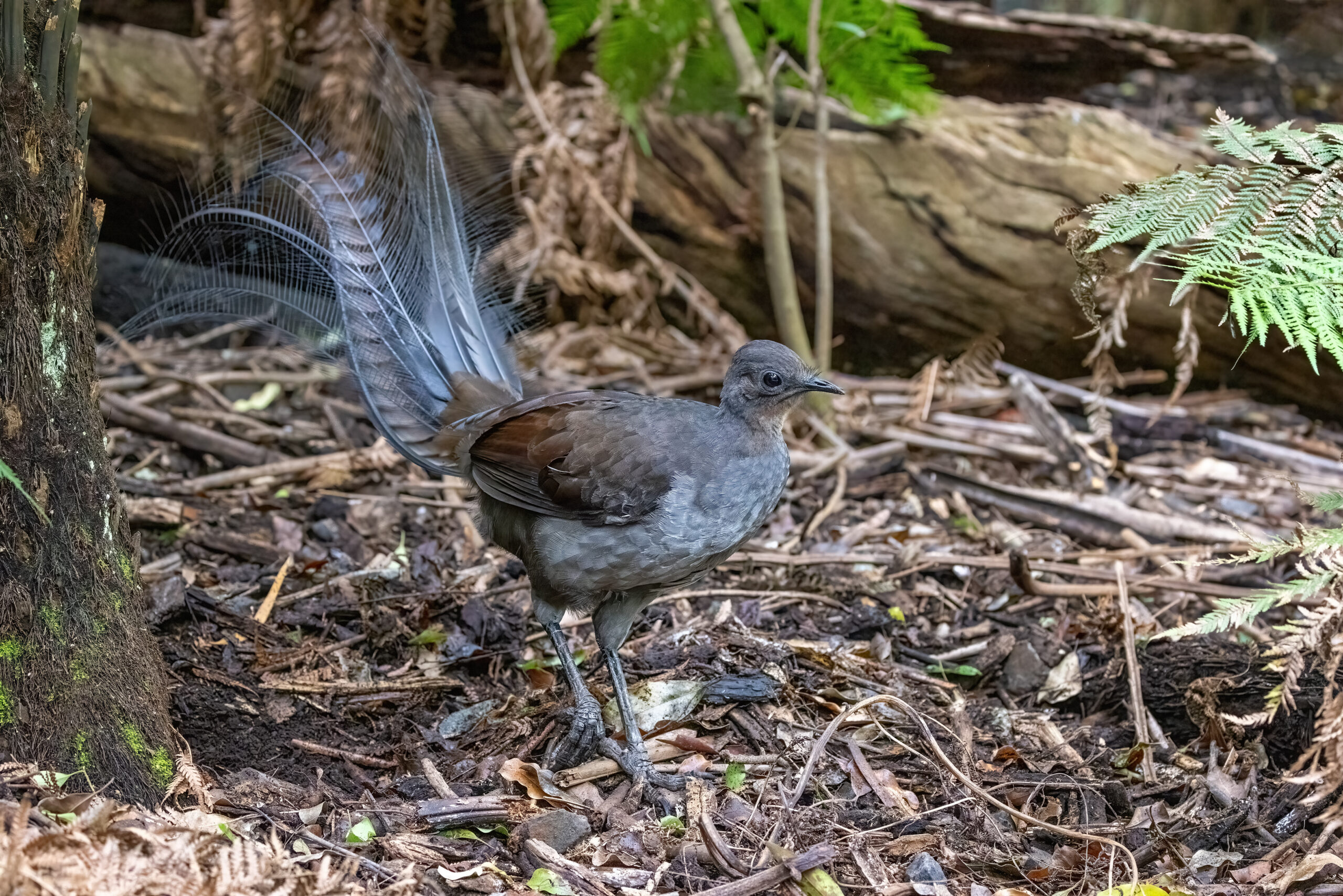
The Dandenong Ranges are home to one of the most elusive Australian birds, the superb lyrebird (Menura novaehollandiae). Rarely seen but often heard, these birds are renowned for their magnificent tails and ability to mimic almost every sound they encounter. Wurundjeri people hunted the lyrebird to collect and trade its tail feathers with other clan groups and, after colonisation, for sale in Melbourne.
Thomas Tregellas became a preeminent authority on this bird, after spending years observing lyrebirds from a hollowed-out log he turned into his forest home and called Menura in Sherbrooke Forest. Tregellas’s work in the 1920s and 1930s inspired other naturalists including Raymond Littlejohns, who helped capture the first sound recording of a lyrebird in 1931.
Thomas Tregellas
You can find this sign along XXXXX
More
This is just placeholder text. Don’t be alarmed, this is just here to fill up space since your finalised copy isn’t ready yet. Once we have your content finalised, we’ll replace this placeholder text with your real content.
Sometimes it’s nice to put in text just to get an idea of how text will fill in a space on your website.